An Introduction to a Study in Nehemiah
I have lived in nineteen different places in my lifetime, five different US states, and (for one memorable summer) a single Canadian province. That’s nineteen front doors. Nineteen back yards. Nineteen kitchens and nineteen different neighborhoods. When I think of the number of neighbors I’ve known over my lifetime, the weight of moving settles over me like a thick blanket. To be clear, the act of moving – wrapping all the glasses and plates in old newspaper, boxing up the family knick-knacks and collections, the endless books, clearing out each closet, filling boxes and labeling them using a sturdy black Sharpie to note room and contents, loading the furniture and boxes and bins onto a U-Haul moving van – that is the easy part. The hard part is finding yourself again after the move, after the boxes are unloaded and unpacked, after the furniture is placed in strange rooms that smell weird and foreign. I was from 2828 6th Street NW just yesterday, now I’m from 4295 Chesser Road. Does 2828 me still have the same life as 4295 me? Am I the same?
I remember leaving a small pink hair barrette in my closet at 2828 6th Street NW when we moved. I thought it would indicate to the family moving in that this was a good room for a little girl. I close my eyes and can still see it on the wood floor, small and insignificant. It was the start of a trail of breadcrumbs I left for myself to find home again. I left a hole in my bedroom door on Chesser Road. I had covered it with a poster for several years so my parents wouldn’t see the evidence of a really bad sibling argument. They saw it on moving day. That poster was the last thing in the house, and I was an anxious mess all day, waiting for them to notice it, hoping they wouldn’t. They did. I left a bicycle behind in South Carolina, unwillingly, I might add, with the neighbor girl. It was a red bike. Another breadcrumb. There was the full bucket of freshly picked New Brunswick blueberries dumped on purpose down the hill in the Wallaces’ back yard. I can still see the bucket tipping in my five-year old hands, the blueberries spilling out and rolling like a tiny blue rock-slide down the hill in front of me. They are long gone now, eaten by birds or little critters, but the memory is a signpost or milestone for me – that was bad day. I left myself a breadcrumb warning, “This is not a place to call home.”
My grandmother grew up a short distance from where I live now. She told me stories of climbing the mountain up the road from their two-story duplex and swinging back and forth on the baby birch trees. She also told me about a handmade wooden canoe that they used as a sled one winter on that mountain. It hit a tree and broke in half. There were ten children, so they lived on both sides of the duplex. Her memory of that house, even when she was in her nineties, remained clear. Two sets of stairs. Two kitchens. An attic where her mama hung laundry to dry. If her mama was hanging laundry in the attic and one of the kids yelled for help, Mama Fisher would have to run down one set of stairs and up the other to get to the needy child. That house is gone now. I drove by the spot recently and saw a vacant lot, as if the place never existed. In her later years, my grandmother often would sigh and say, “Oh, Honeygirl. I just need to get home. There’s so much to do.” But, the place she loved is now gone, and grandma herself has flown Home.
And so we get to the true point of this post. Heaven. Home. Our real Home. Not the mint-green aluminum-sided craftsman on 6th Street NW. Not the three bedroom brick-faced ranch on Chesser Road, or the foursquare farmhouse without insulation at the end of the electric wires in Southeast Ohio. Not even the current farmhouse with its red metal roof and cheery woodstove in the living room. Home is ahead. It turns out that trail of breadcrumbs I was leaving behind me was pointing me forward all along.
Before he was a prophet in Israel, Samuel was a small boy. He was born in Ramah, by God’s gracious intervention on behalf of his mother Hannah (I Samuel 1:1-20), and Ramah was the setting of his early years. But Samuel spent most of his growing up years in the tabernacle at Shiloh (I Samuel 1:21-28), ministering before the Lord in service to Eli, the priest. When Samuel was old enough to leave his mother, Hannah and Elkanah took him to Shiloh and dropped him off. I just took one of my sons to college and left him there this fall. He’s three and a half hours away. So many tears on my part, and he’s an adult! I’m sure Hannah was mourning even in her joy. Did she cry the ugly cry like I did as we drove away from campus? Even though the tabernacle was only 15 miles from her home in Ramah, it wasn’t as if she could load up the family mini-van on the weekends and go visit her boy.
What I want to note is this bit of information found in I Samuel 8:15-17. The account says, “Samuel judged Israel all the days of his life. And he went on a circuit year by year to Bethel, Gilgal, and Mizpah. And he judged Israel in all these places. Then he would return to Ramah, for his home was there, and there also he judged Israel. And he built there an altar to the LORD.”
“For his home was there…” Even though Samuel spent his growing up years in Shiloh, at the tabernacle, his home was Ramah, and it was to Ramah that he always returned. I’m sure there are lines and boundaries and ancient land reasons behind this fact. But there is also the childhood connection to mother and father in Ramah. It remained Samuel’s home, and he continually returned to it over the years of his service. And God recorded it for us to know. It’s a small fact that matters.
I remember returning home to 2828 6th Street NW for a very brief visit. I don’t remember the details of why we were in Ohio on that particular day, or what made my dad think to drive down our old street, but there we were, rumbling over the brick road to see the old place. It was exactly like I remembered it, mint-green siding and white trim. I was completely surprised and excited to see that my neighbor friend Michelle was outside with her dad and sister as we pulled up to our old house. I eagerly jumped out of the car and ran up her driveway to say hello. I’m not sure what I expected from her, but the blank stare and frozen body were not it. I said my awkward pre-teen hello and goodbye and quickly got back into our family car. My dad’s question floated back from the front, “Is that what you wanted?”
No. Not at all. I wanted to have a moment where Michelle and I remembered being little, riding bikes around the neighborhood, picking grapes off the vine on the neighbor’s fence, climbing trees. Instead I got a frozen look and awkward silence. I was no longer from 6th Street NW. I had certainly changed and grown. The place I loved was not the same either. Every now and then, I do a quick Google maps search to see if the old craftsman is still there on that brick street, to check if the County Fairgrounds are on the map, or if the city has turned them into a parking lot, and to see if the surrey racetrack and stables next to the fairgrounds have survived progress. So far, it’s still there. Although, I’m pretty sure the racetrack isn’t used anymore, and the jockeys and horses have left the stables.
In her song “My City Was Gone,” Chrissie Hynde laments the progressive changes liberally applied to her hometown, Akron, Ohio. I echo her sentiment in verse two:
“Well, I went back to Ohio
Song by The Pretenders ‧ 1984
But my family was gone
I stood on the back porch
There was nobody home
I was stunned and amazed
My childhood memories
Slowly swirled past
Like the wind through the trees
Ay, oh, way to go, Ohio”
Chrissie and I aren’t the only transplants to lament the conditions of our hometowns. Let me introduce you to Nehemiah, son of Hacaliah, an Israelite exile in the city of Susa, cupbearer to King Artaxerxes. Nehemiah hears news from his homeland (Judah), news that is so discouraging he fasts, mourns, and prays for days (Nehemiah 1:1-4). The news is, “The remnant there in the province who had survived the exile is in great trouble and shame. The wall of Jerusalem is broken down, and its gates are destroyed by fire.”
Imagine the heartbreak he felt hearing that his beloved city was destroyed, the people in danger, and in shame. The rest of the book of Nehemiah outlines his efforts to rebuild the wall of Jerusalem. It’s a fascinating read, one I’ll be digging into over the next few weeks (I hope you’ll join me here as I study it). I am especially drawn to the comforting promise Nehemiah calls to mind in chapter one.
“Remember the word that you commanded your servant Moses, saying, ‘If you are unfaithful, I will scatter you among the peoples, but if you return to me and keep my commandments and do them, though your outcasts are in the uttermost parts of heaven, from there I will gather them and bring them to the place that I have chosen, to make my name dwell there.'”
Nehemiah 1:8-9
This gathering home is a great source of strength and comfort for God’s people. God has gathered, is gathering, and will gather His children home. We are not Home yet. The breadcrumbs point forward.
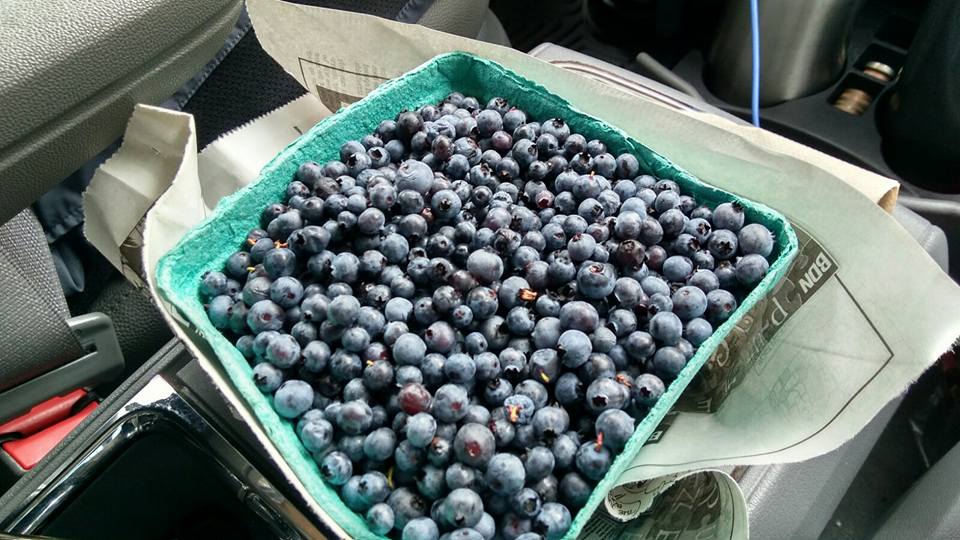
I have found myself pouring over the breadcrumbs I’ve left behind, trying to re-experience the sounds, smells and sights of home, maybe even to fix the broken parts so memories can feel safer. For example: the dumped bucket of New Brunswick blueberries. My oldest son lives in Nova Scotia now, so we frequently drive the long road through Maine to see him in summer. There’s a blueberry stand on that road. I have bought no less than six, and probably closer to ten quarts of roadside blueberries from that stand. I eat them right from the newspaper wrapped carton as we drive towards Calais, Maine, and the Canadian border. I have yet to find a better tasting blueberry. Does it change the childhood memory? Not at all. But, it does offer a salve for the dumped bucket wound. And it lets me love blueberries again.
I also am on the hunt for the taste and smell of honeysuckle. We used to pick it off the neighbor’s tangled shrub on 6th Street NW, pull the bottom off the bloom (the trick was to get the “honey” to come out with the stamen) and suck the nectar out. I have yet to discover the right plant. It’s almost as if my childhood memory is based on a sense of smell and taste buds I don’t have anymore. Pretty sure there’s some science behind that thought. In her book, The Place You Love is Gone, Melissa Holbrook Pierson writes: “But it’s the recollection of those childhood smells and sights that really gets you. They have an edge, a vibrancy that makes you wonder if maybe you really died some years ago and now just wander your world as a ghost with no nose…the child is closer to the ground by a few feet, closer to all perfumes that emanate from the earth. And his senses are not yet ground down by age.”
This hunt for familiar sights, sounds, smells and tastes can cause an emotional deluge. One Spring, I drove from my old farmhouse in Pennsylvania to my mother’s home near the Pennsylvania border. She loaded her suitcase into my van and settled herself into the passenger seat. I made sure her seatbelt was on correctly (it wasn’t), and turned the radio on. Mom and I sang along to the radio, and she bobbed her head to the rhythm. We were headed, by way of hilly West Virginia, to our old home in Southeastern Ohio. If you haven’t taken a road trip with your own mother and you can, what is stopping you, and what are you even doing with your life? It was so much fun! We had a strange and somewhat scary detour in West Virginia due to a bridge being completely gone. No bridge. The highway ended and dropped off without much warning, just one squad car near the drop-off, and its lights weren’t even on. After surviving the back hills of West Virginia (cue the banjo), it was a relief to pull into the driveway of our friend’s Ohio home. I snapped a selfie in her front yard to capture the odd feeling of standing feet away from where my old house used to sit, an old two-bedroom trailer that had since been sold and moved.
I was delighted to be in familiar space. The air felt right; the sun was in the right spot, and the trees were familiar. But the true emotions didn’t leak out until Sunday morning when mom and I entered our old church. I stepped through the door under the bell tower – was the rope still there? I can’t remember now. Then we walked through the double doors into the sanctuary. Muscle memory is real. My whole body turned to the left to get a piece of gum or candy from the guy who sat in the back just as I had for years growing up in this country church. I burst into tears when I saw him still there, smiling at me. I felt like I stepped into the front door of Home. Worship with those saints was so sweet that day.
Elyse Fitzpatrick talks about moments like this and calls them “thin places.” She describes moments and places on earth that draw our heart’s attention to our true Home, Heaven. In her book Home: How Heaven and the New Earth Satisfy Our Deepest Longings, she says, “The church on earth is the doorstep of the church in heaven. No, it isn’t heaven on earth…it is still located here on this dark planet, with its roots in dirty soil, yet it is the shining portal through which we catch glimmers of golden light, hear whispers of the angelic choir’s refrains, and smell the aroma of breaking bread.”
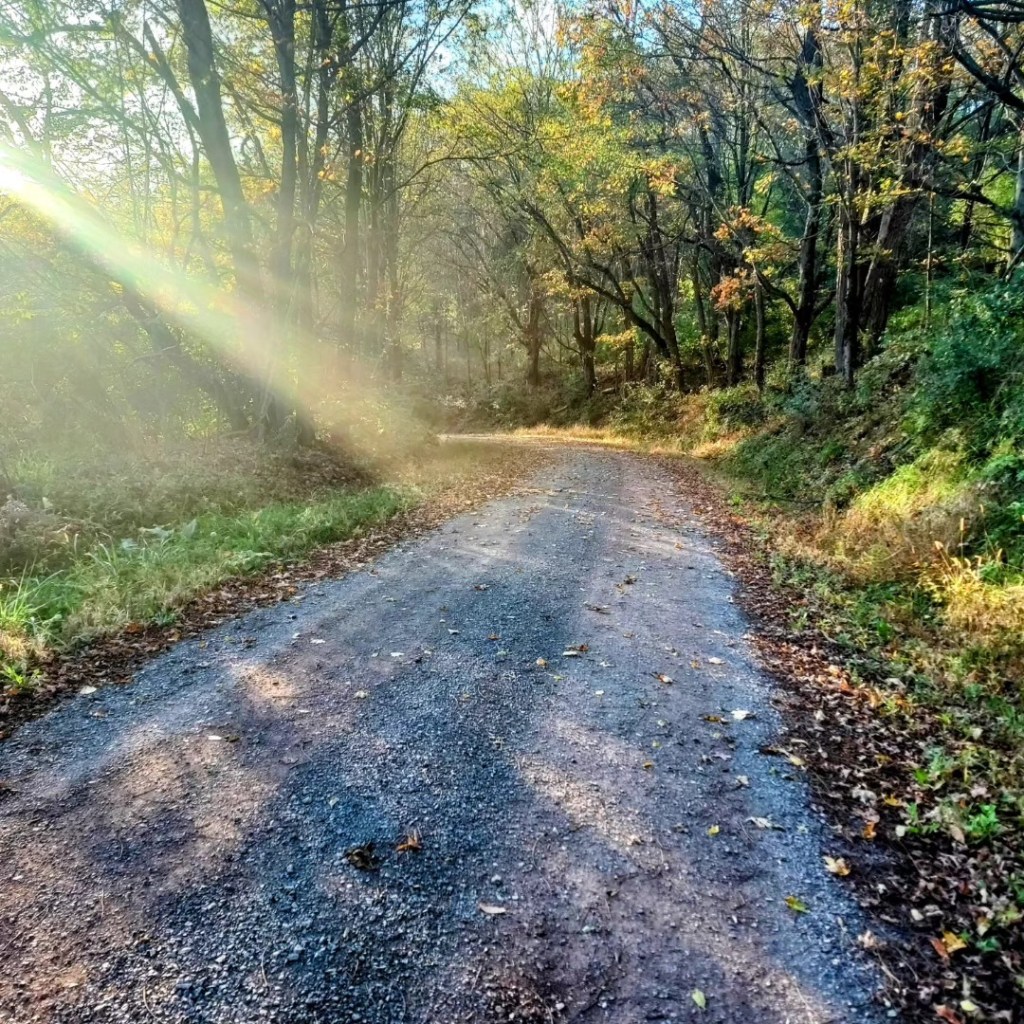
There is something powerful and quieting about coming home. We drive the highways and streets of our hometown and turn left to head up the familiar country road. There is the sheep farm with the brown faced sheep and the blue farmhouse with the potager garden to the side. The road narrows after that, and a blind curve reminds the driver to pray without ceasing. Another stretch of road, a right turn up the curving dairy farm road, left at the top, and left again. And there it is – the road down into the hollow we call home. It means a warm woodstove in winter, and the sweet greeting waggles and barks of an overgrown Labradoodle. It means table fellowship with loved ones and a cozy spot to read God’s Word. This home is where we practice real Home, where our children have learned about the place waiting for us. I hope we have created a thin spot here for them, where heaven is made more real.
The prophet Isaiah describes our true Home as a place where we will be comforted, at rest, surrounded by beauty, taught by the Lord, experiencing peace and no fear. The Lord says to His people:
“O afflicted one, storm-tossed and not comforted, behold I will set your stones in antimony, and lay your foundations with sapphires. I will make your pinnacles of agate, your gates of crystal, and all your wall of precious stones. All your children shall be taught by the LORD, and great shall be the peace of your children. In righteousness you shall be established; you shall be far from oppression, for you shall not fear; and from terror, for it shall not come near you.”
Isaiah 55:11-14
 Christina Grubb
Pingback: Coming Home | Christina Grubb